

Thousands of cars in one place to make your choice easier. Find the perfect match for your budget and style.
Blog>Connected Car Technologies in 2025
The automotive industry has been undergoing one of the fastest digital transformations in its history. At the center of this revolution lies Connected Car technology, a system that allows vehicles to communicate with their environment, the internet, and other vehicles.

Writer
Last update: 89 days ago
Carify Office
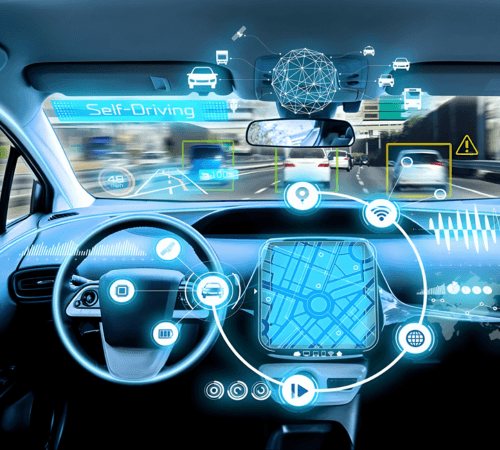
The automotive industry has been undergoing one of the fastest digital transformations in its history. At the center of this revolution lies Connected Car technology, a system that allows vehicles to communicate with their environment, the internet, and other vehicles.
Today’s cars are no longer just machines for transportation — they are smart digital platforms on wheels. Connected vehicles continuously exchange data between drivers, passengers, other cars, and even city infrastructure, creating safer, smarter, and more efficient mobility.
🔗 What Is a Connected Car?
A connected car is a vehicle equipped with sensors, wireless networks, and internet access that allows it to communicate with the outside world.
Using GPS, 4G/5G connections, cloud computing, and AI-driven software, these vehicles can receive and transmit real-time information.
This means your car communicates not only with you but also with:
Other vehicles (V2V – Vehicle to Vehicle)
Infrastructure systems (V2I – Vehicle to Infrastructure)
Pedestrians (V2P – Vehicle to Pedestrian)
Cloud services (V2C – Vehicle to Cloud)
The result is a transportation ecosystem that reduces traffic congestion, prevents accidents, and makes driving smoother and more enjoyable.
📶 Core Technologies Behind Connected Cars
1. Real-Time Data Sharing
Connected cars share real-time information about traffic, weather, and road conditions. This helps drivers choose alternative routes, avoid traffic jams, and reach their destinations faster.
2. Cloud-Based Integration
Vehicles remain constantly connected to manufacturer servers via cloud systems. Software updates can be delivered Over-The-Air (OTA) — meaning the vehicle’s firmware can be updated remotely without visiting a service center.
3. Smart Mobile Applications
Drivers can manage their cars directly from their smartphones — locking or unlocking doors, starting the engine, adjusting climate control, or tracking the vehicle’s location with a single tap.
4. Advanced Safety and Sensor Systems
Cameras, radars, and ultrasonic sensors continuously analyze the vehicle’s surroundings. In case of a potential hazard, the system can automatically alert the driver or even apply the brakes to prevent an accident.
5. 5G Connectivity
The backbone of the next generation of connected cars is 5G. With high-speed, low-latency communication, data can be exchanged instantly between vehicles and the cloud — a crucial step toward fully autonomous driving.
🌍 Benefits for Drivers, Cities, and Manufacturers
Connected Car technology offers significant advantages on multiple levels — from individual drivers to entire smart cities.
🔸 For Drivers:
Access to real-time traffic and navigation updates
Remote vehicle management and control
Predictive maintenance and early warning for potential failures
Improved safety through automatic emergency alerts
🔸 For Cities:
Smart traffic management and reduced congestion
Priority routes for emergency vehicles
Reduced emissions and more eco-friendly transportation systems
🔸 For Manufacturers:
Real-time performance data and predictive diagnostics
Continuous software support via OTA updates
Better user experience through data-driven innovation
⚠️ Security and Data Privacy Challenges
With great connectivity comes great responsibility.
Since connected cars are constantly online, cybersecurity becomes a critical concern. Manufacturers now implement advanced encryption, firewalls, and AI-based threat detection systems to protect vehicle networks from potential attacks.
Privacy is another key issue — connected cars collect sensitive information such as location, driving habits, and trip history. Therefore, data must be securely encrypted, anonymized, and stored in compliance with privacy regulations like GDPR.
🚙 The Road Ahead: Toward Fully Connected and Autonomous Mobility
Connected car technology lays the foundation for autonomous vehicles. In the near future, cars will communicate seamlessly with one another and with city infrastructure, drastically reducing accidents and traffic jams.
Vehicle-to-Vehicle (V2V) communication will help prevent chain collisions, while Vehicle-to-Infrastructure (V2I) systems will allow cars to “talk” to traffic lights, parking lots, and smart city sensors.
This evolution will eventually lead to fully automated, self-managing traffic systems — cities where cars, roads, and people are connected in one intelligent network.
🔋 Conclusion: Not Just a Car, but a Smart Companion
As of 2025, Connected Car features are no longer exclusive to luxury models. Even mid-range vehicles now come with built-in internet access, mobile app integration, and smart safety systems.
The car of the future won’t just take you from one place to another — it will listen, learn, and adapt to your driving style.
Connected Cars mark the beginning of a new era in mobility — one where technology, safety, and sustainability work together to redefine what driving means.
Highly curated content, case studies, Riverside updates, and more.
Share this post:

Mercedes-Benz’s flagship S-Class enters 2026 with a comprehensive update. This refresh goes far beyond minor tweaks — it introduces significant improvements in design, technology, comfort, and driving experience.
2 days ago
View Detail
In the past, buying a car meant talking about engine size, horsepower, or fuel consumption. Today, completely different questions are coming to the forefront
3 days ago
View Detail
Buying a car is a long-term financial decision that requires careful research. Knowing what to consider when buying a car helps you choose the right vehicle while protecting your budget, we cover the most important points to consider when purchasing a new or used car.
4 days ago
View Detail
Modern cars have gone beyond being just a means of transportation. With advancing technology, vehicles have become smart devices that shape our lives in terms of safety, comfort, and connectivity.
5 days ago
View Detail